We got a chance last weekend to visit the Rainbow Village in Taichung. I have wanted to visit since we moved here, but never got around to it until now. It is small, but it lives up to its name: Rainbow village. There are maybe four buildings and they are all painted in extremely bright colors with many animals and cartoon people. It was interesting to learn the story behind the village is really one of resistance rather than just another kitschy tourist attraction.

According to the information placard that was in English there is so much more to the rainbow village than meets the eye. Here is a quick historical overview, when the Kuomintang (KMT) government (non-communist) was fighting the Chinese communist government they retreated to Taiwan. KMT soldiers were given housing much like WWII soldiers returning to the US were given housing under the GI Bill of Rights. These houses were quickly put together and not necessarily of the best craftsmanship. Eventually, the government began to sell off the land that these houses were on and displace the tenants. In 2010 the government offered Huang Yung-Fu, or “Rainbow Grandpa” as he is commonly referred, money to relocate, but he refused. As his neighbors moved away, he was left alone in his house which he began to paint along with the surrounding buildings. Local college students noticed his art and campaigned to preserve it, to which the government agreed. Now it is a very popular tourist attraction. If you want extra details a simple google search for Rainbow Village Taiwan should fill in the gaps.
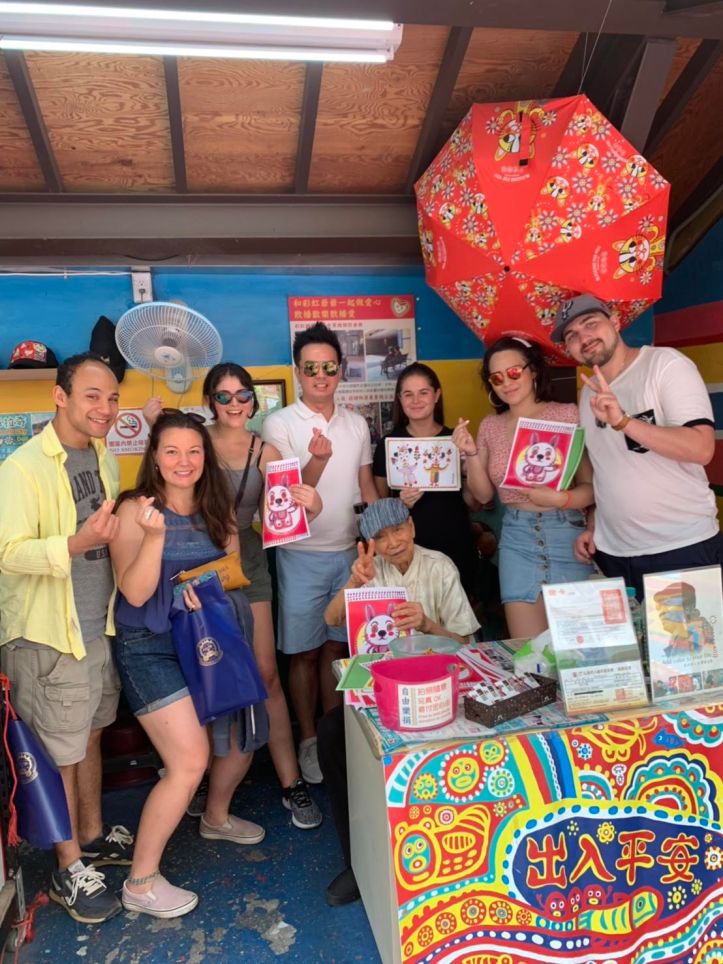
Every morning Rainbow Grandpa gets up early to restore and touch up his artwork. It is a tourist attraction, but it is still his house that he lives in. As we were wandering around the village, we got the opportunity to take a photo with Rainbow Grandpa himself! Apparently during the day, he will often sit in the shade under a fan and watch people enjoy his artwork. One article I read mentioned that he said that his neighbors may have moved away, but the people that come to see his art ensure that he is never lonely. I do not have a large Mandarin vocabulary, but I was able to tell him, “Wo xihuan ni de jia.” Roughly translated, “I like your house ☺”. Each wall is unique and the different buildings vary in their portrayal of animals, people, and bright patterns. Even with the weekend crowds, we managed to get some photos that look like there is not many other people around.
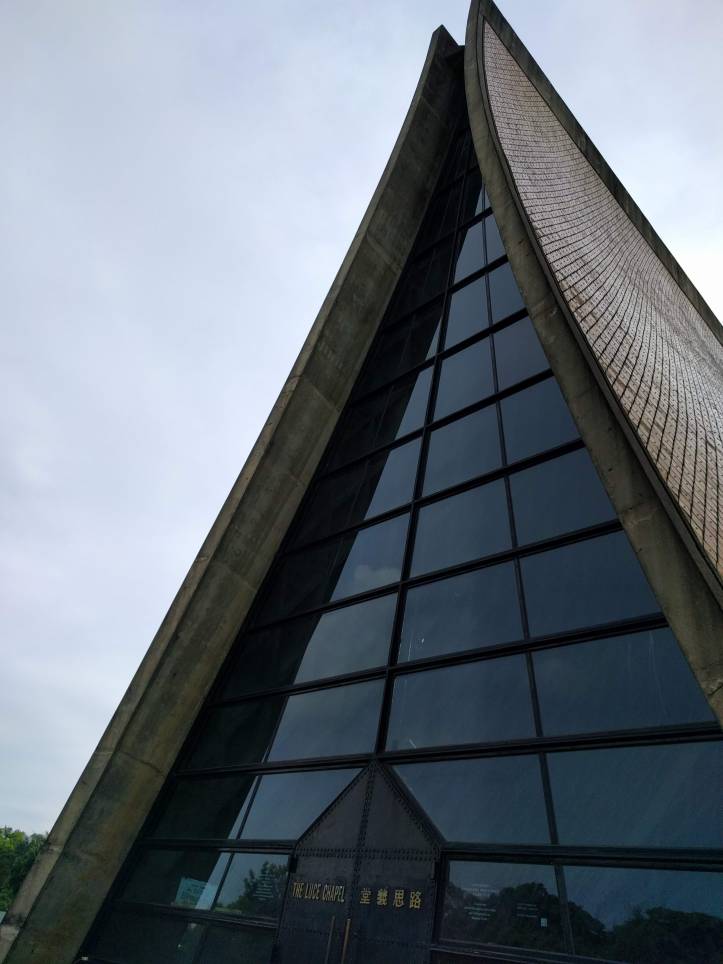
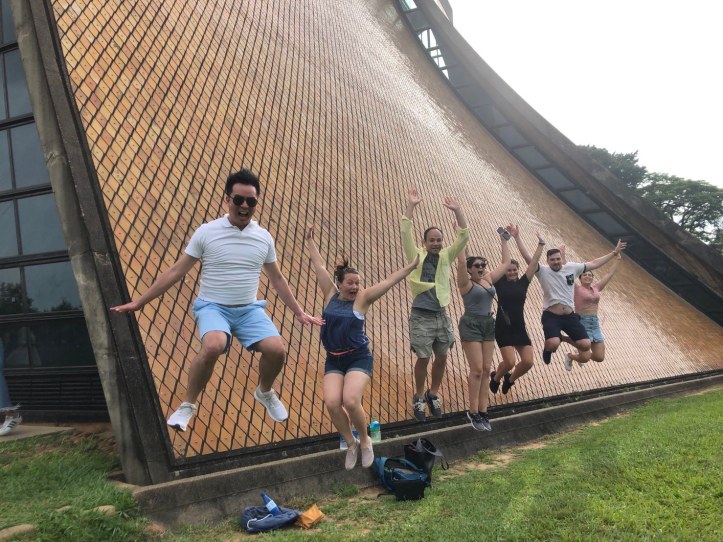
Afterward, we left the Rainbow Village we went and saw the Luce chapel, which was designed by the famous Chinese-American architect, I. M. Pei. Knowing that he also designed the iconic Louvre glass pyramid, you can see the resemblance in his work with his use of geometric shapes. The Luce chapel came first, so maybe there was some influence in the Louvre from his earlier work. I like the simplistic style and the fact that the ceiling is glass, so up close you see two parts instead of one building. We took the obligatory Instagram jumping photo before we headed to the Wu Wei Tsao Tang Teahouse for dinner.
Wu Wei Tsao Tang Teahouse is like a garden restaurant transplanted in the middle of a big city. It was amazing how peaceful it was despite the bustling city surrounding it. There was a pond in the center of the restaurant and they let you feed the fish and turtles while you are there… the food was good too. During dinner they had live music with traditional instruments to further the disbelief that we were in the city.

It was a fun day in Taichung. I am glad that we finally got around to doing some sightseeing.
 Ikimashou?